The Woolbuddy Felting Mat: What It Is, Why It Matters, and How to Use It
The Woolbuddy Felting Mat: What It Is, Why It Matters, and How to Use It
Ask any Woolbuddy customer what their favorite tool is, and you might be surprised. It’s not always the needles. More often than not, it’s the mat.
Jackie’s favorite needle felting tool has always been the felting mat — and Woolbuddy is actually the original creator of the wool felting mat. We’ve been refining it for years, and every design decision comes from real felting experience. So we have a lot to say about it.
Here’s everything you need to know: what a felting mat does, why the material matters, how to use yours correctly, and how to keep it in great shape for the long haul.
What Does a Felting Mat Actually Do?
A felting mat is the surface you work on during needle felting. You always felt on a mat — never on a hard table. Here’s why it matters:
- Protects your needles. Felting needles are fragile. If they hit a hard surface mid-poke, they snap. The mat gives the needle somewhere to go after it passes through the wool, so it doesn’t bottom out on your table.
- Holds your project in place. A good mat grips the wool slightly as you work, keeping your project stable without you having to hold it down.
- Protects your work surface. Repeated needle punctures would destroy a table. The mat takes that wear instead.
- Helps shape 3D projects. For sculptural work, you can press the wool into the mat’s surface to help form curved bottoms and even shapes.
Why a Wool Mat Is Different from Foam
Most felting mats on the market are made from foam — the same dense foam you’d find in a seat cushion or packing material. They work, and they’re affordable. But there are real trade-offs.
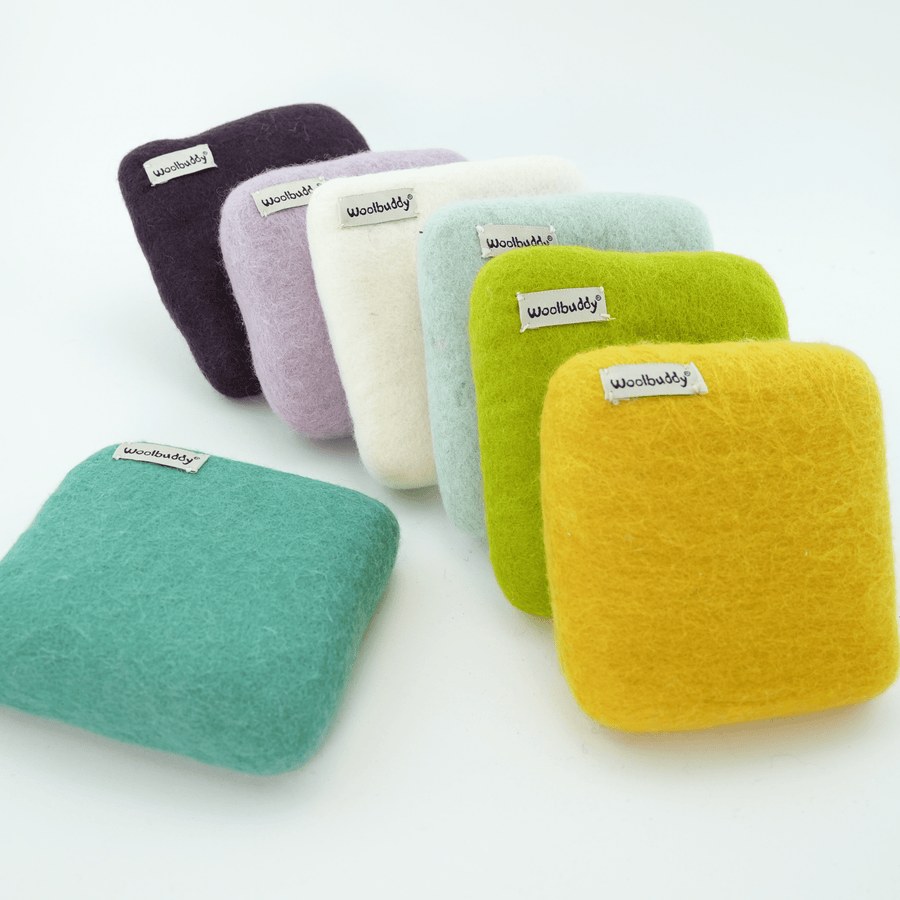
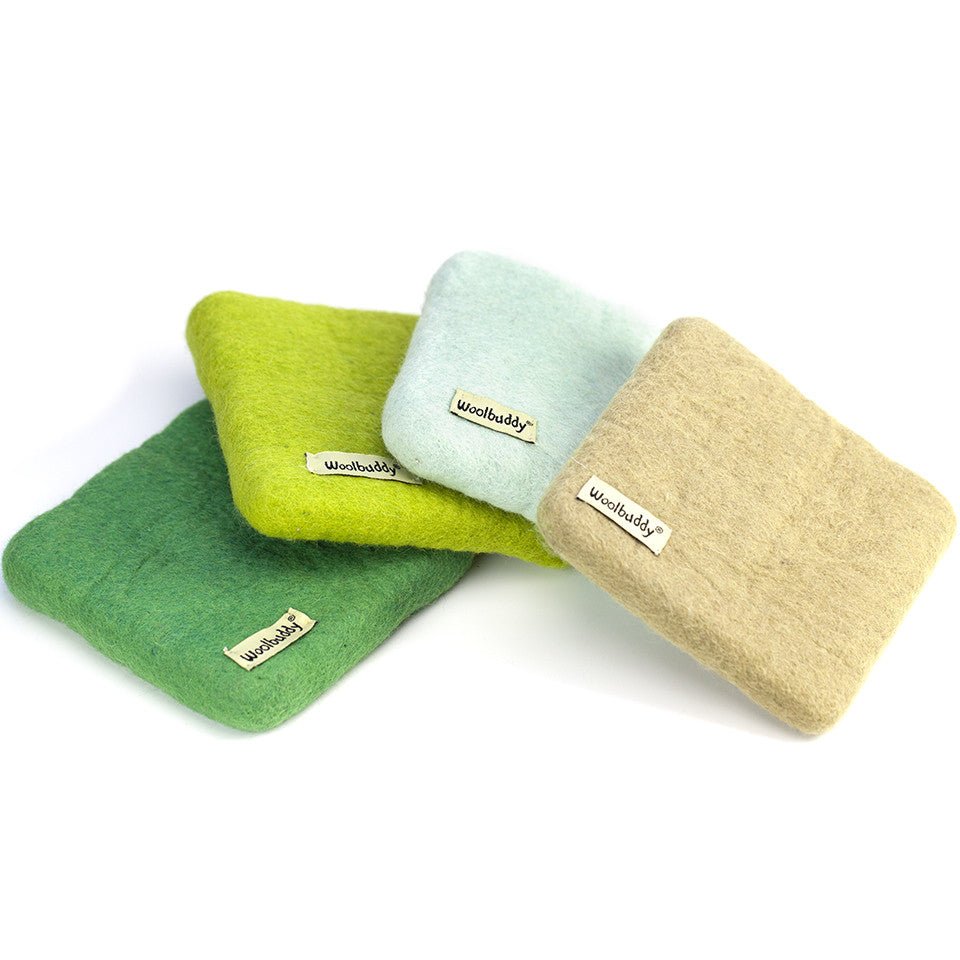
The Woolbuddy mat is made from wool. That distinction matters more than it might seem:
Eco-Friendly
Wool is a natural, renewable, biodegradable material. Foam is typically petroleum-based and not biodegradable. If environmental impact matters to you, wool is the obvious choice.
Better Needle Feel
Wool gives a slightly different resistance than foam — more consistent and forgiving. Many felters find it easier to maintain a smooth rhythm and get cleaner results, especially on finer detail work.
Doesn’t Shred
Foam mats break down over time — you’ll notice little foam particles working their way into your wool. With a wool mat, what you’re poking into is the same material you’re working with, so any trace transfer is invisible in the finished piece.
Longer Life
A well-maintained Woolbuddy mat can last for years of regular use. Foam mats tend to compress and lose their cushion faster, especially with heavy or repeated needle work.
Which Size Is Right for You?
Woolbuddy mats come in two sizes:
- Small (5” x 5” x 1.5”): Perfect for most beginner kit animals, ornaments, and detail work. Compact, easy to store, great for travel or workshops.
- Large (9.5” x 9.5” x 1.3”): Better for bigger projects, multi-part builds, or when you want more working room. Also ideal if you’re teaching or doing multiple projects in one session.
When in doubt, start with the small. Most Woolbuddy kits are designed around it, and it’s easier to control your project on a smaller surface when you’re learning.
How to Use Your Woolbuddy Mat
Using a felting mat correctly makes a real difference in how long it lasts and how well your projects turn out.
*Place it on a flat, stable surface. A table or desk works well. Make sure it’s not going to slide around as you work.
*Set your wool project on top. The mat’s surface will grip it lightly. You’ll immediately feel the difference when felting on a hard surface.
*Poke straight up and down. Always keep your needle perpendicular to the mat. Angling the needle sideways is the main cause of needle breakage — and it can drag your project into the mat, making it hard to lift off.
*Rotate your project regularly. Lift and turn your project every minute or so. This prevents it from felting itself into the mat surface and ensures even density on all sides.
*Don’t poke in the same spot repeatedly. Work across the surface in a consistent rhythm, moving gradually rather than hammering one area. You’ll get more even results and a longer-lasting mat.
One thing to watch for:
Over time, the surface of the mat will accumulate loose wool fibers. That’s completely normal and doesn’t affect performance. But if you notice it getting matted down in specific spots, it’s time to give it a little care.
Keeping It in Good Shape
A well-cared-for Woolbuddy mat lasts for years. The basics:
- Pick off excess wool fiber from the surface between sessions. A quick hand-pick or gentle brush is usually enough.
- Keep it dry and away from moisture when storing.
- Lay it flat — don’t roll or fold it for storage, which can cause uneven compression.
For a full deep-clean walkthrough — including how to remove embedded wool fibers and what to do if the surface gets matted — see our complete care guide:
Ready to Try It?
Whether you’re just starting out or upgrading from a foam pad, the Woolbuddy mat is one of those tools that quietly improves everything about the felting experience. You notice it more when it’s not there.
Pick up a small mat to start, or grab the large if you’ve got big projects in mind. Both are available in the Woolbuddy shop.